Translate

Tupac Amaru Shakur, " I'm Loosing It...We MUST Unite!"

Friday, May 15, 2020

Black Delivery Driver Held Against His Will in Gated Community by White Resident

black delivery driver

In the latest edition of black people being held to a different standard, a black delivery driver was “imprisoned” in a gated Oklahoma City complex by white homeowners, according to ABC News.

For more than an hour, a black delivery driver was trapped in an Oklahoma City gated community earlier this week by a white man who said that he was the president of the local homeowner’s association.

Travis Miller, who is a home appliance and furniture delivery driver, had filmed the encounter on his Facebook Live account while driving through the neighborhood of Ashford Hills.

“I just know that emotionally, it was hard to maintain restraint, especially when I’m dealing with death in the family, two family members within two days of each other,” Miller told KFOR-TV on Wednesday. “I just did the best I could to not make a bad situation worse.”

Miller had been given the code to the gate by the client who ordered the items to be delivered. After completing the delivery, Miller and his colleague were questioned about why they were on that street by a white man, who identified himself as David Stewart and said he was a board member of the homeowners association, as can be seen on the Facebook Live clip of the confrontation.

“Got me blocked in so I can’t leave,” Miller said, referring to Stewart as he blocked them in with his car.

“I want to know where you’re going?” said Stewart, who told Miller that he was driving on a private street.

Miller then says, “It’s none of your business. I’m going out, that’s where I’m going.”

Miller remained seated in his truck and recorded the interaction on Facebook.

“I was gripping the steering wheel, and I made sure I kept my seat belt on,” he told KOCO-TV. “I locked the doors, tried to keep the window up.”

After about 30 minutes, another homeowner joined the man in his inquiry.

“All we want to know is why you’re in here and who gave you the gate code,” the second homeowner said. “That’s all we need to know.”

Miller refused to reveal his client’s personal information.

“I don’t know what prompted him to, or what has happened in that neighborhood, for him to respond the way he did,” Miller said.

“I knew if I get out this truck, no matter what happened, I would have been in the wrong,” he said. “I always say to myself, ‘I’m going to go home to my wife and my kids.’”

Police did not go to the scene because the original caller phoned back and said officers were no longer needed, police Capt. Larry Withrow said.

“If our original caller tells us they no longer need us, unless we have reason to believe there is something wrong or something illegal happening, we cancel the call,” Withrow said.

Miller said Stewart eventually moved his car because his customer arrived at the scene and confirmed that he had just received a delivery.


from Black Enterprise https://ift.tt/2Z1KF8m
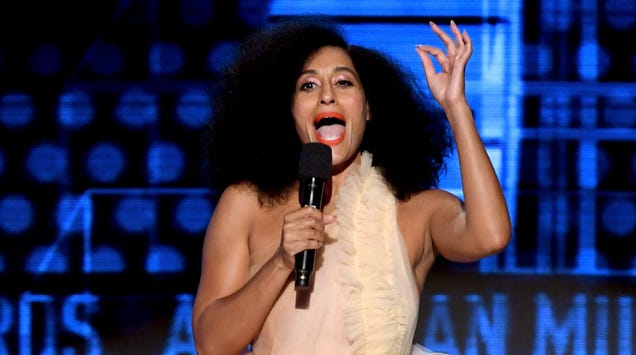
It’s Her Turn: Tracee Ellis Ross Debuts Her First Ever Song, ‘Love Myself’

Tracee Ellis Ross is “reaching out to touch” your heart with her new song debut!

Read more...


from The Root https://ift.tt/2LsYSmI

Black Delivery Driver Held Against His Will in Gated Community by White Resident

black delivery driver

In the latest edition of black people being held to a different standard, a black delivery driver was “imprisoned” in a gated Oklahoma City complex by white homeowners, according to ABC News.

For more than an hour, a black delivery driver was trapped in an Oklahoma City gated community earlier this week by a white man who said that he was the president of the local homeowner’s association.

Travis Miller, who is a home appliance and furniture delivery driver, had filmed the encounter on his Facebook Live account while driving through the neighborhood of Ashford Hills.

“I just know that emotionally, it was hard to maintain restraint, especially when I’m dealing with death in the family, two family members within two days of each other,” Miller told KFOR-TV on Wednesday. “I just did the best I could to not make a bad situation worse.”

Miller had been given the code to the gate by the client who ordered the items to be delivered. After completing the delivery, Miller and his colleague were questioned about why they were on that street by a white man, who identified himself as David Stewart and said he was a board member of the homeowners association, as can be seen on the Facebook Live clip of the confrontation.

“Got me blocked in so I can’t leave,” Miller said, referring to Stewart as he blocked them in with his car.

“I want to know where you’re going?” said Stewart, who told Miller that he was driving on a private street.

Miller then says, “It’s none of your business. I’m going out, that’s where I’m going.”

Miller remained seated in his truck and recorded the interaction on Facebook.

“I was gripping the steering wheel, and I made sure I kept my seat belt on,” he told KOCO-TV. “I locked the doors, tried to keep the window up.”

After about 30 minutes, another homeowner joined the man in his inquiry.

“All we want to know is why you’re in here and who gave you the gate code,” the second homeowner said. “That’s all we need to know.”

Miller refused to reveal his client’s personal information.

“I don’t know what prompted him to, or what has happened in that neighborhood, for him to respond the way he did,” Miller said.

“I knew if I get out this truck, no matter what happened, I would have been in the wrong,” he said. “I always say to myself, ‘I’m going to go home to my wife and my kids.’”

Police did not go to the scene because the original caller phoned back and said officers were no longer needed, police Capt. Larry Withrow said.

“If our original caller tells us they no longer need us, unless we have reason to believe there is something wrong or something illegal happening, we cancel the call,” Withrow said.

Miller said Stewart eventually moved his car because his customer arrived at the scene and confirmed that he had just received a delivery.


from Black Enterprise https://ift.tt/2Z1KF8m

Meet the Black Ballerina and Entrepreneur Helping People Heal From their Trauma

Black Ballerina and Entrepreneur

Tyde-Courtney Edwards, founding director of Ballet After Dark, is a classically trained black ballerina, art model, and survivor of sexual assault who is on a mission to help others heal from their trauma through the art of ballet. Now, during the pandemic, she is helping people unwind and reset their focus on healing virtually as her studio is closed.

Edwards began her journey at the Baltimore School for the Arts and has over 20 years of dance training and experience. She is trained in various styles of dance including classical and contemporary ballet, pointe, modern, lyrical, jazz, tap and hip-hop. And she has trained with esteemed companies such as the  Debbie Allen Dance Academy, Dance Theatre of Harlem, Peabody Conservatory, Joffrey Ballet, Alvin Ailey and other institutions while receiving training from local dance pioneers such as Anton Wilson and Stephanie Powell.

With myriad dance experience, Edwards was inspired to create trauma-informed ballet classes after overcoming an adverse experience of her own. Ballet After Dark is an organization that provides holistic dance therapy to trauma survivors and other disenfranchised individuals.

Their curriculum introduces participants to various elements of self-care while infusing beginner’s ballet and athletic conditioning. Survivors can expect to develop ballet fundamentals such as technique and terminology while being encouraged to heal in an empowering, trauma-informed environment. The program culminates in a showcase performance that highlights ballet technique learned throughout the program.“

Healing Through the Arts

“I conceptualized Ballet After Dark after struggling with recovery following my own sexual assault. I often say the program was born out of necessity. It was a struggle finding welcoming, safe spaces where other black women were working through trauma while struggling to reconnect with their bodies,” said Edwards.

“The reality I was faced with is that the resources did exist—they just seemed to benefit women that didn’t look like me. I wanted to surround myself with my sisters who had the same feelings and questions that I had. I was desperately searching for the space that would gradually let me feel like myself and allow others into my intimate space again,” she added.

While COVID-19 has forced many small black-owned businesses to close, it has opened the virtual doors for Ballet After Dark.

Black Ballerina
(Image: Ballet After Dark)

Ballet Amid COVID-19

“I like to think that COVID-19 has forced me to explore my creativity and business savvy on a deeper level. While the most devastating impact of the crisis has been not being able to host in-studio classes and workshops for our survivors and allies, we’ve adapted recognizing that there is still opportunity during this otherwise chaotic time.”

She went on to say that while going digital has been an exciting adjustment that is stretching the company in new ways.

“While challenging, it’s definitely not impossible thanks to platforms like Instagram, Facebook and Zoom. In fact, we’ve been able to conceptualize a way for us to host our first virtual trainer-to-trainer workshop series! Happily, even during this pandemic, we’re still able to create opportunities for more women within our community. It pleases my heart to be able to formally announce that we will be hiring virtual instructors,” Edwards shared.

Black Ballerina
(Image: Ballet After Dark)

“The impact virtual classes have had has been extraordinary. We’ve been able to touch and connect with survivors and allies who may have never had an opportunity to experience our curriculum in the studio. We’re planning to roll out our new digital format out at the end of June,” she added.

During quarantine, it is important for people to remain active and engage in activities that promote wellness. Beyond the ‘quarantine 15’, Edwards says the best advice she can offer to others is to be gentle to themselves during quarantine.

“You’re smarter than you think and you’re stronger than you know… if you’re feeling motivated to move or create then do that! Listen to your body and don’t succumb to any pressure in reference to the types and frequencies of activities you should stay engaged in to have a “successful” quarantine. At the root of everything, Ballet After Dark is about healing and self-care and having a transparent realization of what that journey may look like… because it’s going to be different for everyone,” said Edwards.


from Black Enterprise https://ift.tt/2T5Jcu0

Meet the Black Ballerina and Entrepreneur Helping People Heal From their Trauma

Black Ballerina and Entrepreneur

Tyde-Courtney Edwards, founding director of Ballet After Dark, is a classically trained black ballerina, art model, and survivor of sexual assault who is on a mission to help others heal from their trauma through the art of ballet. Now, during the pandemic, she is helping people unwind and reset their focus on healing virtually as her studio is closed.

Edwards began her journey at the Baltimore School for the Arts and has over 20 years of dance training and experience. She is trained in various styles of dance including classical and contemporary ballet, pointe, modern, lyrical, jazz, tap and hip-hop. And she has trained with esteemed companies such as the  Debbie Allen Dance Academy, Dance Theatre of Harlem, Peabody Conservatory, Joffrey Ballet, Alvin Ailey and other institutions while receiving training from local dance pioneers such as Anton Wilson and Stephanie Powell.

With myriad dance experience, Edwards was inspired to create trauma-informed ballet classes after overcoming an adverse experience of her own. Ballet After Dark is an organization that provides holistic dance therapy to trauma survivors and other disenfranchised individuals.

Their curriculum introduces participants to various elements of self-care while infusing beginner’s ballet and athletic conditioning. Survivors can expect to develop ballet fundamentals such as technique and terminology while being encouraged to heal in an empowering, trauma-informed environment. The program culminates in a showcase performance that highlights ballet technique learned throughout the program.“

Healing Through the Arts

“I conceptualized Ballet After Dark after struggling with recovery following my own sexual assault. I often say the program was born out of necessity. It was a struggle finding welcoming, safe spaces where other black women were working through trauma while struggling to reconnect with their bodies,” said Edwards.

“The reality I was faced with is that the resources did exist—they just seemed to benefit women that didn’t look like me. I wanted to surround myself with my sisters who had the same feelings and questions that I had. I was desperately searching for the space that would gradually let me feel like myself and allow others into my intimate space again,” she added.

While COVID-19 has forced many small black-owned businesses to close, it has opened the virtual doors for Ballet After Dark.

Black Ballerina
(Image: Ballet After Dark)

Ballet Amid COVID-19

“I like to think that COVID-19 has forced me to explore my creativity and business savvy on a deeper level. While the most devastating impact of the crisis has been not being able to host in-studio classes and workshops for our survivors and allies, we’ve adapted recognizing that there is still opportunity during this otherwise chaotic time.”

She went on to say that while going digital has been an exciting adjustment that is stretching the company in new ways.

“While challenging, it’s definitely not impossible thanks to platforms like Instagram, Facebook and Zoom. In fact, we’ve been able to conceptualize a way for us to host our first virtual trainer-to-trainer workshop series! Happily, even during this pandemic, we’re still able to create opportunities for more women within our community. It pleases my heart to be able to formally announce that we will be hiring virtual instructors,” Edwards shared.

Black Ballerina
(Image: Ballet After Dark)

“The impact virtual classes have had has been extraordinary. We’ve been able to touch and connect with survivors and allies who may have never had an opportunity to experience our curriculum in the studio. We’re planning to roll out our new digital format out at the end of June,” she added.

During quarantine, it is important for people to remain active and engage in activities that promote wellness. Beyond the ‘quarantine 15’, Edwards says the best advice she can offer to others is to be gentle to themselves during quarantine.

“You’re smarter than you think and you’re stronger than you know… if you’re feeling motivated to move or create then do that! Listen to your body and don’t succumb to any pressure in reference to the types and frequencies of activities you should stay engaged in to have a “successful” quarantine. At the root of everything, Ballet After Dark is about healing and self-care and having a transparent realization of what that journey may look like… because it’s going to be different for everyone,” said Edwards.


from Black Enterprise https://ift.tt/2T5Jcu0

Black Faith

  • Who are you? - Ever since I saw the first preview of the movie, Overcomer, I wanted to see it. I was ready. Pumped. The release month was etched in my mind. When the time...
    6 years ago

Black Business

Black Fitness

Black Fashion

Black Travel

Black Notes

Interesting Black Links

Pride & Prejudice: Exploring Black LGBTQ+ Histories and Cultures

  In the rich tapestry of history, the threads of Black LGBTQ+ narratives have often been overlooked. This journey into their stories is an ...