Translate

Tupac Amaru Shakur, " I'm Loosing It...We MUST Unite!"

Thursday, May 14, 2020

Vegan Product Sales Soar Amid The COVID-19 Pandemic

The COVID-19, or novel coronavirus, pandemic has hit the food and restaurant industry hard with many restauranteurs struggling to keep their businesses afloat under the new stay-at-home restrictions. While the restaurant side of the industry may be on the verge of collapse, it is the polar opposite for supermarkets and other food items sold in local grocery stores. One sector that is particularly thriving under the virus outbreak is vegan food products.

An estimated one billion people worldwide do not eat meat and have removed animal products from their diets. In countries like Germany, the sales of vegetarian and vegan products have increased by 65.3% since 2017. Numerous celebrities such as Nick Cannon have invested in opening vegan restaurants while influencers like Tabitha Brown have found new fame teaching others how to make vegan dishes.

According to a Veganz poll, 95% of participants cited animal welfare as a factor in why they went without animal products while 83.9% also listed environmental reasons as a factor in opting for vegan products.

Since the start of the pandemic, vegan brands have seen a significant increase in sales and product gains. Beyond Meat have increased their sales by 82% since the beginning of the year. Bio Gaia gained 8%. This was during the same period the Dow Jones fell by 15% while the DAX lost 18% of its value.

According to forecasts and new data collected, the sales of vegan meat products worldwide will reach roughly $120 billion within five years. By 2040 that number could rise to $450 billion.

“Manufacturers of vegan products are also increasingly popular on the trading floor,” says cryptoscene analyst Raphael Lulay in a press statement. “Not least due to the food’s reception among consumers. In particular, progress in the field of in-vitro meat production could give an already strong growth trend a further boost.”


from Black Enterprise https://ift.tt/3bui1PS

Will Health Tracking Technologies Help Workers Stay Safe on The Job?

Health Tracking Technologies

Millions of Americans are anxious to get out of the house and get back to work. Yet, no one truly knows what the workforce and the daily routines of going back to work will look like post-COVID-19. As leaders plan and prepare for the unknown, some are opting-in for digital health screening options. But the question remains, will it work as it relates to keeping people safe while on the job? Experts are saying that it might not.

In a recent New York Times piece, experts weighed in on a number of symptom-checking apps and fever-screening cameras that are said to predict sick workers and help flatten the curve. In short, they believe that a number of the devices could violate privacy and produce inaccurate reports.

For the story, The Times followed Subway franchise owner Bob Grewal who has begun screening his employees in Los Angeles. Grewal is using PopID, a facial recognition and fever detection camera service to take temperatures before staffers clock in and records historical health data. Grewal asked employees to check their temperatures four times a day.

“People are going to adjust,” Grewal told the Times. “They’re going to have to understand all the safety precautions that chains have taken.”

As leaders look for solutions to keep their businesses moving forward, experts say that added surveillance might not be as helpful as some might think.

Michael T. Osterholm, the director of the Center for Infectious Disease Research and Policy at the University of Minnesota told The New York Times, “I think employers need to look carefully before they jump into any of this. Some companies are embarking upon things that are not going to help and may actually set us back.”

To date, Salesforce and PwC are using similar technologies to help track employees through contact tracing. A number of employers are said to follow suit using similar mapping and surveying efforts to monitor employees based on White House guidelines to re-open America.

Experts believe that mandated health screenings could create a new class system for employment and a number of other issues.

Hank Greely, a professor at Stanford Law School who studies the social implications of new health technologies told the Times, “Do we really want a world where some people can go to work and others can’t based on their immunity status? The people who can’t will say, ‘This is unfair,’ and they’ll be right.”

Related: The Coronavirus Will Hit Low Wage, Black Workers The Hardest

Others have expressed concern about inaccuracies from infrared technologies that can’t detect sickness in people who are asymptomatic.

Health screenings can change the workforce indefinitely. For that reason, some employers are taking their own health and safety measures so that screening technology doesn’t interfere with how they do business.

For more insight, continue to read the full story on The New York Times.


from Black Enterprise https://ift.tt/2TkYAmr

Will Health Tracking Technologies Help Workers Stay Safe on The Job?

Health Tracking Technologies

Millions of Americans are anxious to get out of the house and get back to work. Yet, no one truly knows what the workforce and the daily routines of going back to work will look like post-COVID-19. As leaders plan and prepare for the unknown, some are opting-in for digital health screening options. But the question remains, will it work as it relates to keeping people safe while on the job? Experts are saying that it might not.

In a recent New York Times piece, experts weighed in on a number of symptom-checking apps and fever-screening cameras that are said to predict sick workers and help flatten the curve. In short, they believe that a number of the devices could violate privacy and produce inaccurate reports.

For the story, The Times followed Subway franchise owner Bob Grewal who has begun screening his employees in Los Angeles. Grewal is using PopID, a facial recognition and fever detection camera service to take temperatures before staffers clock in and records historical health data. Grewal asked employees to check their temperatures four times a day.

“People are going to adjust,” Grewal told the Times. “They’re going to have to understand all the safety precautions that chains have taken.”

As leaders look for solutions to keep their businesses moving forward, experts say that added surveillance might not be as helpful as some might think.

Michael T. Osterholm, the director of the Center for Infectious Disease Research and Policy at the University of Minnesota told The New York Times, “I think employers need to look carefully before they jump into any of this. Some companies are embarking upon things that are not going to help and may actually set us back.”

To date, Salesforce and PwC are using similar technologies to help track employees through contact tracing. A number of employers are said to follow suit using similar mapping and surveying efforts to monitor employees based on White House guidelines to re-open America.

Experts believe that mandated health screenings could create a new class system for employment and a number of other issues.

Hank Greely, a professor at Stanford Law School who studies the social implications of new health technologies told the Times, “Do we really want a world where some people can go to work and others can’t based on their immunity status? The people who can’t will say, ‘This is unfair,’ and they’ll be right.”

Related: The Coronavirus Will Hit Low Wage, Black Workers The Hardest

Others have expressed concern about inaccuracies from infrared technologies that can’t detect sickness in people who are asymptomatic.

Health screenings can change the workforce indefinitely. For that reason, some employers are taking their own health and safety measures so that screening technology doesn’t interfere with how they do business.

For more insight, continue to read the full story on The New York Times.


from Black Enterprise https://ift.tt/2TkYAmr

Ahmaud Arbery Murder Suspect Had Confrontation With Black Man Days Before Shooting; New Light Shed on Glynn County Police

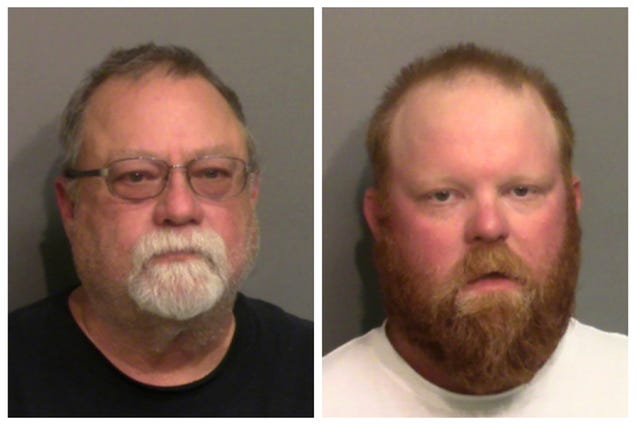
Travis McMichael, one of two men charged with murdering 25-year-old Ahmaud Arbery in February, had a confrontation with an unidentified black man at a construction site less than two weeks before the Feb. 23 killing, CNN reports.

Read more...


from The Root https://ift.tt/2WXOsAG

London woman, 47, dies of coronavirus after man spat on her

London railway worker Belly Mujinga died just weeks after a man assaulted her. Mujinga was working at the city’s busy Victoria station when a customer became irate with her. In his aggression, he coughed and spat at her and her coworker on March 22. He then told them that he had coronavirus.

Both Mujinga and the coworker became ill not long after. Mujinga succumbed to the virus on April 5.

READ MORE: Detroit bus driver who warned against dangers of coronavirus dies

A police investigation was launched more than a month later. Railway police are asking for anyone with information about the incident to come forward.

Mujinga’s union, the Transport Salaried Staffs’ Association, said she was “a vulnerable person” and classified as high risk because of health issues “known to her employer.” Despite her preexisting conditions, Mujinga was reassigned to a more customer-facing role and was not provided with personal protective equipment.

Victoria station theGrio.com
Commuters arrive at London Victoria station. (Photo by Jack Taylor/Getty Images)

United Kingdom Prime Minister, Boris Johnson, called Mujinga’s death, “tragic.” He added, “The fact that she was abused for doing her job is utterly appalling.”

The incident has sparked outrage across the United Kingdom and in the United States where other acts of assault and even murder of essential employees have occurred during the coronavirus pandemic.

According to a report by the BBC, the TSSA union wrote a letter to Johnson appealing for more compensation for essential employees who will be dealing with more passengers as the country begins to reopen. “Belly Mujinga was one of many transport workers bravely going to work to keep our country moving through the pandemic and ensuring that other key workers can get to their workplaces.”

READ MORE: 41 MTA transit employees have died of the coronavirus

The report says that in addition to Mujinga, 42 other railway workers have died in the United Kingdom.

Mujinga leaves behind a husband and an 11-year-old daughter, Ingrid. A GoFundMe campaign to help support her family has raised tens of thousands of pounds. The page was been set up by Victoria staff Representative on behalf of her family.

The post London woman, 47, dies of coronavirus after man spat on her appeared first on TheGrio.


from TheGrio https://ift.tt/3bviIIK

Black Faith

  • Who are you? - Ever since I saw the first preview of the movie, Overcomer, I wanted to see it. I was ready. Pumped. The release month was etched in my mind. When the time...
    6 years ago

Black Business

Black Fitness

Black Fashion

Black Travel

Black Notes

Interesting Black Links

Pride & Prejudice: Exploring Black LGBTQ+ Histories and Cultures

  In the rich tapestry of history, the threads of Black LGBTQ+ narratives have often been overlooked. This journey into their stories is an ...