The other day a friend texted to gossip (priorities) and to ask a cleaning question:
from The Root https://ift.tt/30ZbQ2z

The other day a friend texted to gossip (priorities) and to ask a cleaning question:
You don’t have to be a Kobe Bryant fan for news of his death to hurt.
You don’t even have to be a huge basketball fan.
It hurts because, for every generation of Black boys, there are only so many real-life role models who look like us.
It hurts because seeing a model of fitness and athletic virility leave us at age 41 is a sobering reminder that tomorrow is not promised.
It hurts knowing that Bryant leaves behind his wife Vanessa and three young daughters, one of whom is so young that she will never remember time spent with her father.
READ MORE: Pilot in tragic Kobe Bryant crash was cleared to fly in foggy weather
As if that pain wasn’t acute enough, we all had to watch and wait for the knife to be pushed in deeper with the news that Bryant’s second-oldest daughter, 13-year-old Gianna, a.k.a. “Gigi,” perished with her father as they were headed to do things that fathers and daughters do together every day.
An update on the scene across from Staples Center: “Kobe” chants in front of a fan-created memorial to Kobe and Gigi. pic.twitter.com/qR3cGas3qO
— NBA on ESPN (@ESPNNBA) January 26, 2020
I am not a traditional NBA fan, but I’m aware that Bryant falls on an extremely exclusive list of athletes who transcend team alliances. I was born at a time and raised in a city (Detroit) that should’ve resulted in me detesting Michael Jordan, but I adored him like every other little Black boy. Same goes for every millennial who came of age and watched Bryant work his magic, regardless of how they felt about the Los Angeles Lakers.
If you’re an NBA stats nerd or Bryant super-fan, you can probably rattle off his professional accomplishments – five championship rings, two Olympic gold medals, lead NBA scorer for two seasons in a row, four All-Star MVP awards, oldest player to score 60 points in a single game, youngest player in NBA history to hit 30,000 points, and so on – without consulting Google.
But even if you aren’t, you’d have to have been stranded on the moon for the last two decades to not recognize Bryant’s influence on the game of basketball. LeBron James, who is often considered along with Bryant and Jordan as the NBA’s greatest player of all time, spoke about Bryant’s influence on his career after breaking his career points record less than 24 hours before his death.
LeBron last night reflecting on his favorite Kobe Bryant memories. It’s unbelievably sad watching this knowing Kobe died less than 24-hours later. #RIPKobe #BlackMambapic.twitter.com/Tas9uYVtYb
— Carlos (@_sweet_bread) January 26, 2020
Continuing to move the game forward @KingJames. Much respect my brother 💪🏾 #33644
— Kobe Bryant (@kobebryant) January 26, 2020
READ MORE: Shaquille O’Neal ‘sick right now’ over Kobe Bryant’s death
Bryant’s impact on pop culture at large was also unavoidable, even if you never watched a second of him dribbling a ball on court. My first encounter with him was as fictitious Crenshaw High School player Terry Hightower on Moesha. There was also his brief foray into music, including that self-titled song with Tyra Banks on the hook (which sounds like the most 2000-est song ever made) from his one and only album, K.O.B.E.
As all legends do, Bryant certainly had his fair share of detractors, as all. Many derided his brusque and off-putting style of competitiveness, arguing that his personality put a blemish on an otherwise objectively singular career.
There was also his 2003 sexual assault case, which was settled out of court and which Bryant arguably weathered because it happened during the nascence of social media, and many years before #MeToo. He was publicly contrite, ultimately got back the endorsements he lost and continued to dominate in the NBA.
The magnitude of those accomplishments are such that Bryant became mononymous – “Kobe!” shouted out when someone attempts a long-range shot in anything ranging from a regulation net to an office trash bucket. He mattered enough that his 2016 retirement became a “tour,” an event unto itself that we likely won’t see again soon (unless James is interested). He mattered enough that NBA games scheduled the day of his death started with a 24-second violation in honor of his now-immortal jersey number.
Both the Pelicans and Celtics took 24-second violations to start tonight’s game to honor No. 24, Kobe Bryant. pic.twitter.com/8EOBQkB5zX
— ESPN (@espn) January 26, 2020
Even as I write this while reading and watching the outpouring of grief, which has spilled onto the live telecast of the Grammy Awards, it’s still difficult to process the fact that he’s gone. His long frame and beaming smile in his photos still makes him feel larger than life and death. The now-viral video of him chatting with his daughter Gigi courtside, presumably about the logistics of the game, seems like something they’ll wake up and do again tomorrow.
Bryant was only a couple years older than me – middle-aged but with so much life and love ahead of him. Despite being retired from a game that may never see another player like him, he still had so much left to accomplish.
He’ll never see the rest of his daughters grow older, graduate college and start families of their own. His wife will go to bed this evening knowing that her cornerstone for two decades is gone, as well as her own child. And Gigi – she was just getting started with life.
You certainly don’t need to be a basketball fan for this loss to cut deeply.
Dustin J. Seibert is a native Detroiter living in Chicago. Miraculously, people have paid him to be aggressively light-skinned via a computer keyboard for nearly two decades. He loves his own mama slightly more than he loves music and exercises every day only so his French fry intake doesn’t catch up to him. Find him at his own site, wafflecolored.com.
The post Kobe Bryant’s death isn’t just about basketball, it’s about the void left behind appeared first on TheGrio.
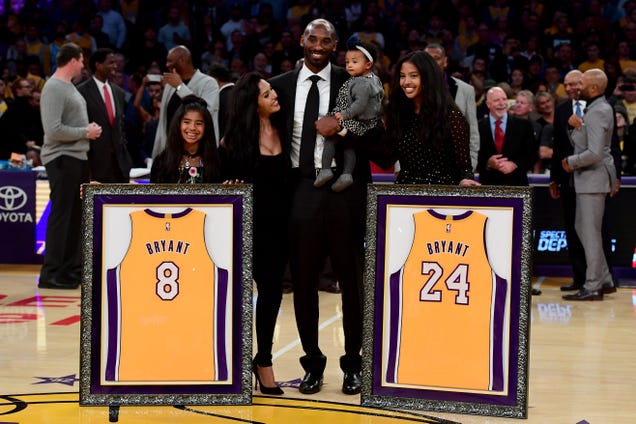
I’m still in disbelief that I live in a world without Kobe Bryant. He started playing when I was 4-years-old, he’s been a fixture of basketball for pretty much my entire life. If he wasn’t playing the sport then he was on ESPN talking it. I wasn’t even a huge Lakers fan growing up but this shit still hurts. The…

Black businesses with socially-driven concepts can now possibly attain some new capital from Citi.
The support will flow from the new $150 million Citi Impact Fund. The backing was started to make equity investments in private American companies that have an upbeat effect on society. The New York-based financial-services giant claims it is the largest fund launched by a bank using its own capital.
Citi claims it’s actively pursuing opportunities to invest in businesses owned or run by minority and women entrepreneurs. Mature minority-owned businesses can receive investments up to $10 million. Additionally, early-stage companies can receive seed investments.
Insufficient capital access is still a lingering challenge for black and other minority-owned firms.
“The gender and ethnic gap in the startup world is very real, with reports showing a small fraction of venture capital funding being allocated to women and minority owned startups,” Ed Skyler, executive vice president, global public affairs at Citi, said in a release. “Our intention is to not only help these businesses scale and thrive but to also shine a light on the investment opportunities among this pool of often overlooked, high potential entrepreneurs.”
The investments will reportedly be dispersed mainly to companies that have established social good business models, prior funding, a sustained customer base, and the capability to grow in several markets. Citi will take minority stake investments in companies alongside other investors. Companies do not need to be a Citi customer to apply. Business can email impactfund@citi.com to apply for funding, a Citi spokesperson says.
“It takes companies of all sizes to address the challenges our society faces today,” Citi CEO Michael Corbat said in a news release. “While Citi’s global footprint and scale allow us to use our balance sheet to play an important role, smaller, newer, ‘double bottom line’ companies play an equally important role in driving change.”
Citi, based on its news release, plans to invest capital in companies that are utilizing innovative solutions to help address four societal challenges:
- Workforce Development – solutions that train and connect people to careers.
- Financial Capability – solutions that increase access to the financial system.
- Physical & Social Infrastructure – solutions that improve an individual’s way of life through housing, healthcare, and transportation.
- Sustainability – solutions that address issues related to energy, water, and sustainable production.
William Michael Cunningham, an economist and banking expert, says the (Citi funding) is an encouraging move. He added that’s not because of the announcement, but because of the potential that other banks may follow Citi’s lead and create additional equity funding vehicles targeted to minority and women businesses.
He noted JPMorgan Chase & Co. reported 2019 earnings of $36.4 billion, the best year for any U.S. bank in history. Citigroup, which uses Citi as a brand name, posted profits of $19.4 billion for last year. “With banks reporting record earnings, we expected that they would have to move to address concerns put forward by [Elizabeth] Warren and [Bernie] Sanders on income inequality and fairness,” Cunningham says. “In addition, many have raised serious concerns about the gender gap.”
Cunningham says the amount of money allocated to other minority groups, including white women businesses, will determine the impact the fund has on the black business sector. “Citi is silent on this, so we will have to wait and see.”
Cunningham noted while $150 million sounds like a lot of money, it is 0.4% of JPMorgan’s profits. Cunningham says equity financing needs in the black business sector totals at least $20 billion, based on an analysis of Federal Reserve data conducted by his firm, Creative Investment Research.
He also pointed out a recent report that revealed black business owners with good credit sores and consistent annual profits were denied business loans from banks. Cunningham added, “there is no reason to believe that this fund will be fairer.”
Still, he says, the Citi funding is a positive development.

Nipsey Hussle and his long-time business partner, David Gross, had a vision for an investment initiative that Gross has kept alive following the Grammy Award-winning rapper’s untimely death.
Born Ermias Joseph Asghedom, Nipsey and Gross founded Our Opportunity, a grassroots investment initiative that was started in Hussle’s neighborhood in L.A., but the plans are to extend Our Opportunity’s reach to inner cities around the country like Atlanta, Chicago, Washington, DC, and New Orleans.
In October 2019, Gross launched the #InvestorChallenge to introduce the organization and to encourage new investors to get involved. According to its website, Our Opportunity is a community facing organization focused on spreading economic opportunity throughout inner cities via direct engagement and impact. The objective is to identify and implement grassroots initiatives that work locally and scale them nationally. The objective was to open 1,000 new accounts and since December 2019, 450 new investors have opened accounts with that number increasing within the past month.
Gross told Complex about the decision to do the #InvestorChallenge, “We want it aligned with our impressionistic vision and objective for our communities, which is to encourage the mindset of investment, ownership, and entrepreneurship broadly. But it was actually a reaction to [another social media campaign]. On Mondays, I used to do this thing on social media called ‘Market Mondays.’ I would answer specific questions about what was going on in the capital markets or financial markets. The reaction I got was so strong, but the majority of the questions I got were from people who would say, “I don’t know anything about investing, but how do we get started?” So it was just a response to that.”
“Trae Tha Truth was the first person who reached out. He was like, ‘That investor challenge when you do it, I want to give, too.’ It was super organic. Then we realized that other people would do it. Then a few other people reached out to me. It didn’t start off as being some structured, organized thing, but because of the buy-in that we got, we had to give it some structure and build it out.”


