Translate

Tupac Amaru Shakur — “I'm Losing It… We MUST Unite!”

Where To Start

Start Here Start at 1619. Move forward.

The Arc is the spine of this project: 40 essays, one chronological argument, five analytical lenses.

This site should read like a structured archive, not a loose category list. The Arc is the entry point; the lenses help you move through it with intention. Empty sections stay hidden until they are live.

Thursday, April 9, 2020

Dr. Joynicole Martinez Debunks Dangerous Myths, Shares Uncommon Insights on COVID-19

Dr. Joynicole Martinez

Dr. Joynicole Martinez is an internationally esteemed epidemiologist and the founder and CEO of the Alchemist Agency. Through her work, she studies chronic and infectious diseases to understand how they spread and how to control them. “I also work to identify societal characteristics that affect the pattern of disease and health distribution,” she told Black Enterprise.

In addition, as a community advancement and population health expert, she has developed initiatives that reach across disciplines to strengthen health and wellness, including the development of mixed-income, mixed-finance housing communities.

Black Enterprise sat down with Dr. Martinez to discuss her work as an epidemiologist, COVID-19, and infectious disease intervention in communities of color.

Black Enterprise: Let’s discuss the current pandemic, COVID-19. What is it and how is it spread?

Dr. Martinez: Coronaviruses are common circulating viruses that usually cause upper respiratory symptoms such as cough or runny nose. COVID-19 illness is caused by a novel coronavirus called SARS-CoV-2 and is the seventh coronavirus identified that infects humans.

The progression of SARS-CoV-2 infection symptoms is broad. It ranges from asymptomatic infection, mild upper respiratory tract illness, and severe viral pneumonia with respiratory failure to death. Although not highlighted in the initial reports, smell and taste disorders have also been reported as symptoms in patients.

Transmission of SARS-CoV-2 is thought to occur mainly through respiratory droplets. Respiratory droplets can be generated by sneezing (40,000 droplets), coughing (3,000 droplets), or talking (about 600 droplets per minute). It can be transmitted through fomites, or objects that can carry the virus on their surface. Finally, viral shedding is possible via asymptomatic people.

The SARS-CoV-2 virus appears to mutate more slowly than the seasonal flu, which should allow an opportunity to develop a vaccine before the next seasonal cycle. Influenza mutates constantly. That’s why it’s necessary to vaccinate against different strains of the flu each year. The virus causing COVID-19 is mutating at a rate that could allow a single vaccine rather than one that needs to be updated each year.

The rapid spread and large number of people in a community who have recovered will offer a level of natural immunity through antibodies combined with the introduction of a vaccine, that develops community or ‘herd immunity.’ In most cases, 80% to 95% of the population must be immune to the disease to stop its spread. The sooner we vaccinate the less likely we are to have another cycle.

Can you distinguish research models from tracking data?

Tracking is used to identify exposures and isolate individuals who are infected or exposed in an effort to “flatten the curve.” Governments across the world are relying on research models (i.e., mathematical projections) to help guide decisions in this pandemic. These models are not meant to serve as a crystal ball. They always describe a range of possibilities—and those possibilities are highly sensitive to our actions. Because models forecast based on these varying populations and sets of conditions, there is a natural level of uncertainty.

In the early phases of the viral spread, no COVID-19 tests were performed in the USA. As testing began to occur, limited data began to arrive. The data from testing and tracking is changing rapidly, so the forecasts and models change daily. The more data we get, the better our forecasts and the faster we recover as a population.

COVID-19

(Dr. Martinez speaking before an international audience of experts on her research at the P50 Summer Peace Summit in Brussels, Belgium)

Are there certain systemic problems associated with the spread of COVID-19?

Unfortunately, we have as much erroneous and misleading information circulating as that which is factual and helpful. A few weeks ago, we heard rumors of blacks being immune to the virus, that ingesting strange and very dangerous treatments (such as drinking bleach) could prevent infection, and that donning the N95, procedure masks, and gloves could prevent you from becoming sick.

Wearing a face mask is not a guarantee that you won’t get sick – viruses can penetrate the highest-rated masks. However, masks are effective at capturing droplets you expel from your mouth. So, the new recommendation is based on some protection being used so you don’t put others at risk. It also suggests that wearing a face mask may provide some protection against the respiratory droplets transmitted by others.

Tight-fitting N95 respirators filter out at least 95% of particles. By comparison, a typical surgical or procedure mask has a range of 60 to 80%. This N95 rating is only achieved when fitted and worn correctly—which is not easy to do. N95 masks are difficult to put on for people who aren’t trained medical professionals. If you’ve put the mask on right, it is hot and stuffy, so a lot of people take it off before it can be effective.

The masks, gowns, gloves, hoods, and other PPE are also expensive. So, when people seek out testing and they aren’t critically symptomatic, they further strain our already taxed medical infrastructure. The test is not treatment, and there is no magic cure.

Have communities of color been desperately impacted by this situation?

The research shows that individuals with comorbidities are more likely to be hospitalized. Comorbidities or pre-existing conditions that seem to make COVID-19 illness more dangerous and more likely to require hospitalization include hypertension (most common), followed by diabetes and coronary artery disease, COPD, chronic liver disease, asthma, and obesity. People who have immune systems that are compromised have a reduced ability to fight infections and other diseases. This may be caused by certain diseases or conditions, such as AIDS, cancer, diabetes, malnutrition, and certain genetic disorders.

According to the most recent data available from Department of Health and Human Services Office of Minority Health, when compared with non-Hispanic white citizens in the U.S., blacks are 60% more likely to be diagnosed with diabetes, 20% more likely to die from heart disease, have the highest rate of any racial and ethnic group for all cancers combined and for most major cancers, and represent 44% of the HIV positive population.

In the US, blacks and minority groups dealing with systemic obstacles to food, housing, employment, healthcare, and education will more frequently suffer preexisting conditions and become more ill if infected.

The rate of infection is not biological. The virus can’t see your race and it will infect you without regard to your skin color.

Don’t buy into the hype, understand the underlying issues. Racism, segregation, and inequality contribute to health outcomes and drive health disparities across the life course and this pandemic just highlights what we already knew.

What is your best advice, framed as a holistic approach, in addressing the outbreak going forward?

People are our best offense and defense. Individuals must altruistically follow social distancing regulations—that’s their front line. Next is to carefully share information from qualified sources. Finally, adhering to the thresholds for testing, which ensure that professionals treat the most ill and staying safe by sheltering-in-place and practicing strict hygiene protocol are smart things we can all do.

If you’re a middle-aged, reasonably healthy person and you develop mild, flu-like symptoms and think you may be infected, the new guidance is to call your doctor. Your doctor will likely tell you to assume you’re infected and self-quarantine until you’ve been fever-free for three days (unless your condition worsens, in which case call your doctor again).

Social distancing is our only real, scalable strategy at this point. It’s the only lever big enough that, if we pull it really hard, will actually flatten the curve and keep our hospitals from being overwhelmed, as we see in New York City. Plan A was to stop it from escalating. We’re on to Plan B, and there is no Plan C. So, we have to make this work, period.


from Black Enterprise https://ift.tt/3c1JMzO

Baby Phat Partners With Footlocker to Release The Courtside Capsule

Baby Phat

Don’t call it a comeback! Kimora Lee Simmons recently relaunched the iconic Baby Phat clothing line and has struck a partnership with Foot Locker, according to Essence.

In addition to the working relationship with Foot Locker, the former supermodel and Baby Phat founder and her daughters, Ming Lee and Aoki Lee, officially launched a new line named “The Courtside Capsule.”

The prices for The Courtside Capsule are listed between $53 and $114 and features a red, black, and white color scheme. Pieces range from a Full Zip Jogger and Hoodie to a form-fitting dress like the Lace Tank.

The family has also struck an alliance with the Freedom Shield Foundation. Last week, the iconic fashion brand announced a food distribution initiative that will ensure thousands of meals for families affected by the recent coronavirus pandemic. Baby Phat founder Simmons and her daughters, Ming Lee and Aoki Lee have donated approximately 150,000 meals through the Freedom Shield Foundation and have plans to deliver an additional 160,000 meals scheduled for this week. 

Baby Phat has teamed up with the foundation in anticipation of helping support other nonprofits in carrying out food distribution within their communities. The initiative is taking place because people have lost work due to the COVID-19 outbreak. Schools have been closed and many children in poorer neighborhoods relied on the meals they received in school and no longer have access to them. The initiative will also benefit families that are struggling to feed their kids due to COVID-19-related layoffs and furloughs from jobs.

“This is a real girl power story,” Kimora said in a press release. “Ming Lee and Aoki Lee inspire me constantly, because they’re so connected to the way girls and women are dressing today; and cute dresses with cool kicks reign supreme. Baby Phat has always been designed by and for women, and we’ve always bridged ‘feminine’ and ‘sporty.’ That’s what makes Foot Locker such a perfect partner, they have their finger on the pulse of how women dress today because they’ve always cared about women! They understand that this is about lifestyle.”


from Black Enterprise https://ift.tt/2y4nVc9

Social Media Spurred This Black Millennial Scientist to Start Making Hand Sanitizer

Chinonye Akunne hand sanitizer

When scientist Chinonye Akunne, who’s also the co-founder of a vegan and organic beauty company based in Detroit, first noticed how serious the spread of coronavirus was becoming, she got the idea to add a hand sanitizer to the company’s lineup of products.

But before she acted on it, she took the idea to the people who mattered—her customers—gauging their interest via social media.

The result: an affordable purifying hand spray that’s been flying off the virtual shelves. It contains 70% alcohol and is made with ingredients such as eucalyptus (an anti-bacterial that cleanses, purifies, and boosts immunity), rose water (a moisturizing agent to replenish skin cells), lavender, witch hazel, and vegetable glycerin.

Black Enterprise spoke with Akunne about how the product came to be:

How did you start your company?

I started ILERA Apothecary in 2015 out of the need of my youngest brother transitioning to a vegan lifestyle and needing a natural deodorant. My background is in chemistry; I have my Master’s in public health. So I was able to use a lot of my education knowledge as well as my past experience in making different skincare items. And I was able to help him with his natural deodorant.

I gave samples away to friends and family, and people started requesting it. So I decided to grow the business by offering other skincare items such as our body washes, our body butters, our mouthwash, and pretty much the grooming essentials that people use to get ready each day.

hand sanitizer

ILERA Apothecary Purifying Hand Spray

Why did you decide to add hand sanitizer to your offerings? 

We were slated to go to SXSW in March, and I was seeing that companies like Facebook and Twitter were pulling out because of the scare of COVID-19. So I asked my customers on social media if I made a hand sanitizer, would people buy it? And everybody but one person said, yes, they would buy it. Those were 95 people who said yes, so I started making it.

I decided to release those hand sanitizers a week later, and I did pre-orders for them, and we sold out within the first weekend. Now we have been selling hand sanitizers like crazy, which is nice because we took a major hit by not being able to go to SXSW. So it’s nice that the community is rallying behind our brand during these really tough times.

How were you able to start producing it so quickly? 

This is not something that was slated, that we would be developing this year. This is something that came right out of need.

Luckily, we already use a lot of the ingredients that come with the hand sanitizer. The rosewater that I use in it, we already make that in-house for our rose toner, as well as the witch hazel. Then the hydrogen peroxide, we use that in our mouthwash. So I had the ingredients and I did a test batch. I tested it on a petri dish to make sure that no microbes or bacteria were growing. After that cleared, that’s when I went ahead with the pre-orders.

You’re also donating hand sanitizer to those in need.

We have partnered with another company called the York Project. For a few years now, the York Project has been giving sanitary items such as toilet paper, socks, sometimes hats and gloves to the homeless. I saw that they were making masks. And I contacted the owner, who’s also a friend of mine. They’ll be making 250 masks so we’ll be also matching them with 250 hand sanitizers.

This is not the end of time. This is the time to really stay balanced, be present, and be more community-oriented. During this time, we have been able to increase our giving effort. So I will say that this period of slowness has helped us to be a better business overall.


from Black Enterprise https://ift.tt/2JV5h9i

Social Media Spurred This Black Millennial Scientist to Start Making Hand Sanitizer

Chinonye Akunne hand sanitizer

When scientist Chinonye Akunne, who’s also the co-founder of a vegan and organic beauty company based in Detroit, first noticed how serious the spread of coronavirus was becoming, she got the idea to add a hand sanitizer to the company’s lineup of products.

But before she acted on it, she took the idea to the people who mattered—her customers—gauging their interest via social media.

The result: an affordable purifying hand spray that’s been flying off the virtual shelves. It contains 70% alcohol and is made with ingredients such as eucalyptus (an anti-bacterial that cleanses, purifies, and boosts immunity), rose water (a moisturizing agent to replenish skin cells), lavender, witch hazel, and vegetable glycerin.

Black Enterprise spoke with Akunne about how the product came to be:

How did you start your company?

I started ILERA Apothecary in 2015 out of the need of my youngest brother transitioning to a vegan lifestyle and needing a natural deodorant. My background is in chemistry; I have my Master’s in public health. So I was able to use a lot of my education knowledge as well as my past experience in making different skincare items. And I was able to help him with his natural deodorant.

I gave samples away to friends and family, and people started requesting it. So I decided to grow the business by offering other skincare items such as our body washes, our body butters, our mouthwash, and pretty much the grooming essentials that people use to get ready each day.

hand sanitizer

ILERA Apothecary Purifying Hand Spray

Why did you decide to add hand sanitizer to your offerings? 

We were slated to go to SXSW in March, and I was seeing that companies like Facebook and Twitter were pulling out because of the scare of COVID-19. So I asked my customers on social media if I made a hand sanitizer, would people buy it? And everybody but one person said, yes, they would buy it. Those were 95 people who said yes, so I started making it.

I decided to release those hand sanitizers a week later, and I did pre-orders for them, and we sold out within the first weekend. Now we have been selling hand sanitizers like crazy, which is nice because we took a major hit by not being able to go to SXSW. So it’s nice that the community is rallying behind our brand during these really tough times.

How were you able to start producing it so quickly? 

This is not something that was slated, that we would be developing this year. This is something that came right out of need.

Luckily, we already use a lot of the ingredients that come with the hand sanitizer. The rosewater that I use in it, we already make that in-house for our rose toner, as well as the witch hazel. Then the hydrogen peroxide, we use that in our mouthwash. So I had the ingredients and I did a test batch. I tested it on a petri dish to make sure that no microbes or bacteria were growing. After that cleared, that’s when I went ahead with the pre-orders.

You’re also donating hand sanitizer to those in need.

We have partnered with another company called the York Project. For a few years now, the York Project has been giving sanitary items such as toilet paper, socks, sometimes hats and gloves to the homeless. I saw that they were making masks. And I contacted the owner, who’s also a friend of mine. They’ll be making 250 masks so we’ll be also matching them with 250 hand sanitizers.

This is not the end of time. This is the time to really stay balanced, be present, and be more community-oriented. During this time, we have been able to increase our giving effort. So I will say that this period of slowness has helped us to be a better business overall.


from Black Enterprise https://ift.tt/2JV5h9i

Wednesday, April 8, 2020

Will Smith and Tyra Banks recreate classic ‘Fresh Prince’ scene

Tyra Banks and Will Smith got together on a joint IG Tuesday to reminisce about The Fresh Prince of Bel-Air and recreated a classic scene and fans loved it.

Banks was a guest on Smith’s Will from Home Snapchat series which he created as a means of entertaining fans through the quarantine.

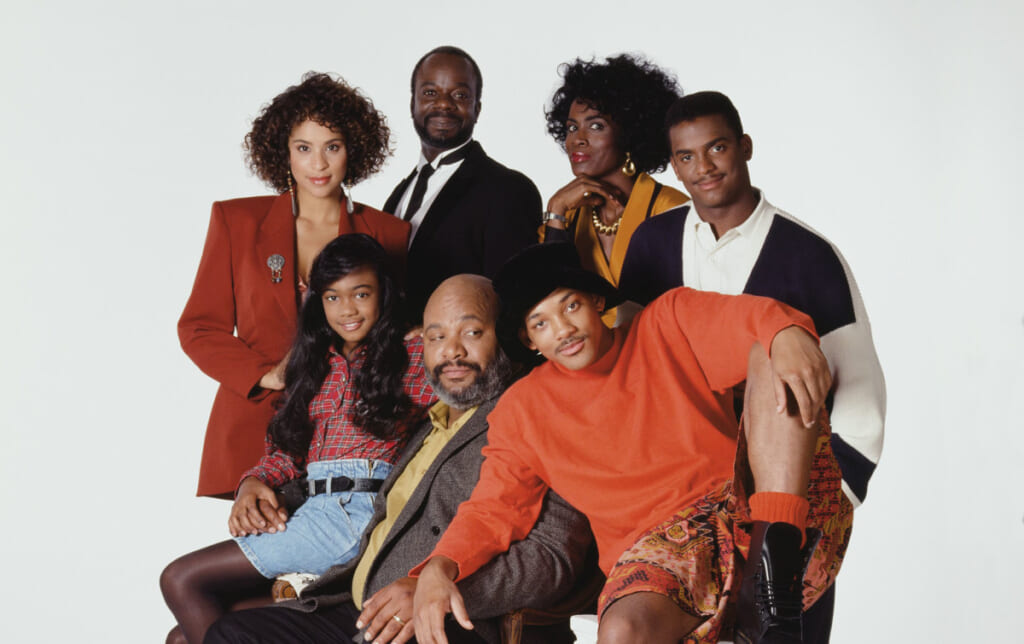
There are few things certain in life, but the enduring fanbase for Fresh Prince is one of them. Whether you encountered the show as an adult, pre-teen, or tween, there’s something about the charisma of its star Smith combined with wholesome family comedy and the camaraderie of the cast that still has people in their nostalgic feelings, as Deontay Wilder would say “to this DAY!”

Fresh Prince thegrio.com
Fresh Prince

READ MORE: Will Smith jokes ‘I Am Legend’ is spreading myths about coronavirus

The NBC sitcom lasted for six seasons from 1990 to 1996 and helped make Smith, then a rapper with his partner DJ Jazzy Jeff, into a multimedia superstar.

Banks, then 19, appeared on the first two episodes on Season 4 as Smith’s Philly ex-girlfriend, Jackie. She told him that it was her very first acting job. At that point, she was an upcoming model but nowhere near the multimedia mogul she is today.

Smith and Banks recreated their pivotal scene from 30 years ago which Banks impressively still had down pat to the delight of the 2.5 million fans who watched and liked it.

“This next piece is one of my favorite moments, I loved that we did this!” said Smith. “Was that one of your first times ever acting?”

“Not one of, that was my first acting job ever,” she responded.

READ MORE: Tyra Banks opens up about emotionally abusive relationship with ex-boyfriend

View this post on Instagram

New #WillFromHome in my bio

A post shared by Will Smith (@willsmith) on

Massachusetts-born rapper Joyner Lucas similarly paid homage to Smith in his recent video “Will” by recreating significant moments in his career, including his time as the Fresh Prince. He and Smith chatted about it on their joint IG session, which drew a thumbs up from Jazzy Jeff.


Given the show’s popularity, maybe the darker, updated version that Smith himself co-signed can finally get made. Here’s the trailer for it:

Are you down for a reboot of The Fresh Prince of Bel Air or would you prefer that the iconic TV show be left alone?

While you think about it, Will From Home is streamed on Mondays, Wednesdays, and Fridays with 12 available episodes. It was launched on April 3.

The post Will Smith and Tyra Banks recreate classic ‘Fresh Prince’ scene appeared first on TheGrio.


from TheGrio https://ift.tt/2XsfxOi