Translate

Tupac Amaru Shakur, " I'm Loosing It...We MUST Unite!"

Thursday, January 9, 2020

Phi Beta Sigma Fraternity, Inc. Demands Ralph Lauren Remove Greek Letters From Its Pants

Ralph Lauren Phi Beta Sigma

A black fraternity is furious at designer Ralph Lauren for using its Greek letters on a pair of chinos, according to Blavity.

On the Ralph Lauren French website, the clothing line is selling a pair of chino pants with the Greek letters Phi Beta Sigma on them. The symbols for the black fraternity are located on the back of the pants in red and black. It was listed at a price of $335.77.

A petition had been started against the fashion designer on Change.org demanding that they stop selling the jeans.

“Phi Beta Sigma Fraternity, Inc. DOES NOT belong on your jeans!!”

“We are a week away from 106th anniversary of the founding of Phi Beta Sigma Fraternity, Inc. and what is plastered all over social media? An ad for Polo Ralph Lauren Chino Graphique Droit with the letters that represent Phi Beta Sigma Fraternity, Inc. Greek letters on the back crease of said pants! Members of Phi Beta Sigma Fraternity, Inc., an illustrious organization stared & shared in utter disbelief!”

“One member said ‘this is copyright infringement at its finest, they have no permission using my letters to sell their pants.’ Did we mention, these pants are selling for 299.99€? If Polo is using these beloved letters so freely, where are the royalties going? To whom did they ask & get permission to use these letters, and why did they feel so comfortable doing this?”

“We are demanding that Ralph Lauren do the right thing and RECALL, DESTROY, & PUBLICLY APOLOGIZE for trying to capitalize off of black culture! We don’t know WHO thought that this was a good idea; but they need to fix it quick! Phi Beta Sigma Fraternity, Inc.is a professional organization that [is] not for sale!”

After the outrage from Phi Beta Sigma became public, a Ralph Lauren spokesperson reached out to Watch The Yard and gave a statement:

“The use of these symbols on our products was an oversight for which we deeply apologize. We are immediately taking action to remove the product from our sales channels. While we have a rigorous review process in place for all of our designs, this has prompted us to take another review of our protocols to help ensure that this does not happen again.

As an American brand with more than 50 years of heritage, Ralph Lauren is inspired by many facets of American culture. As part of this, we are firmly committed to respectful and appropriate use of all cultural icons and insignias.”

They have since removed the chinos from all sales channels and they have reached out to the fraternity.


from Black Enterprise https://ift.tt/2NajFMZ

Aretha Franklin’s youngest son is asking people not to support the MGM-produced biopic, ‘Respect’

Kecalf Franklin, Aretha Franklin‘s youngest son, is staunchly against the Jennifer Hudson-led upcoming biopic of his mom’s life because he says MGM never bothered to get input from Franklin’s children for the film.

READ MORE: First look: Jennifer Hudson as Aretha Franklin in ‘Respect’ biopic

“How can you make a movie about a person and not talk to the persons sons or grandchildren about important information?” Kecalf Franklin wrote in a Facebook post on Saturday. “If you are a “real” fan of my mothers, please do not support this. Ask yourself … would you want this done to you?”

While Franklin said he supports Hudson as the Queen of Soul, who he claims was hand-selected by his mom for the lead role in Respect, he took issue with the rest of the film. The film, which is being produced by MGM, started filming last fall and is scheduled to be released on Oct. 18.

“Everything else is being done against our wishes,” Franklin, 49, wrote in the post. “The Franklin family (does not) support the movie that is in production!”

David Bennett, the longtime attorney for Aretha Franklin, however, took issue with the post and said Kecalf doesn’t speak for his three brothers or other members of the Franklin family.

“He does not speak for the family,” Bennett told The Detroit Free Press. “I know he doesn’t speak for his brother Ted White or his brother Clarence Franklin. The grandchildren have absolutely nothing to do with this. What he’s really doing is talking for himself.”

Further, Bennett said Decalf’s post really has more to do with his desire to “become the personal representative of the estate” instead of Franklin’s niece, Sabrina Owens, and less about the movie. Kecalf is currently petitioning Oakland County Probate Court to be named executor of his late mom’s estate, the news outlet reported.

READ MORE: Barack Obama wants the hat Aretha Franklin wore to his 1st presidential inauguration

Owens has been the executor since Franklin died in 2018 death, and White and Clarence Franklin submitted court filings backing her in the role. However, ever since multiple wills were discovered last spring that each contained different instructions, the family has been in court to try and hash out whether the wills were actually written by Franklin. Last August, Judge Jennifer Callaghan instructed handwriting experts to assess the validity of the documents. Callaghan also ordered Owens and Franklins’ four sons to start mediation.

Charlene Glover Hogan, Kecalf Franklin’s lawyer, did not respond to a Free Press request for an interview on Tuesday.

The post Aretha Franklin’s youngest son is asking people not to support the MGM-produced biopic, ‘Respect’ appeared first on TheGrio.


from TheGrio https://ift.tt/35Baiwu

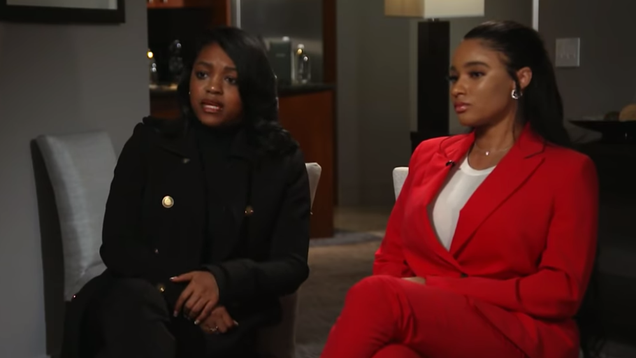
'We Got On Gayle King As Stupid As Can Be': Azriel Clary Reveals She and Joycelyn Savage Lied for R. Kelly

Following the explosive second chapter of the Surviving R. Kelly series, there has been an alarming turn of events involving Robert “R” Kelly’s girlfriends / alleged sex slaves.

Read more...


from The Root https://ift.tt/36Fb1Oe

CEO Dennis Maple Designs New Curriculum For Growth At Goddard School Franchisor

Goddard CEO Dennis Maple

Dennis Maple comes from a family of educators. But instead of standing in front of a whiteboard teaching students, the high-powered corporate veteran is now running a for-profit school system Goddard.

Maple was recently installed as CEO of King of Prussia, Pennsylvania-based Goddard Systems Inc., which licenses more than 500 franchised schools with more than 65,000 students in 37 states. Now the Memphis native, who spent the past two decades in the education sector in such positions as head of Aramark Education, which manages food services and facilities for K-12 schools, and president of First Student Inc., North America’s largest bus transportation company, has been designing a new curriculum for evolution and growth at the franchisor that specializes in early childhood education.

One plank of Maple’s agenda is “new school growth.” Becoming a Goddard franchisee is not a low-cost proposition though: The license fee is $135,000 with a required minimum investment that exceeds $700,000. However, the company states that a franchise earns an average EBITDA (earnings before interest, taxes, depreciation and amortization) of $371,321, based on 2018 results of a school open more than 18 months.

As part of our BLACK ENTERPRISE C-Suite Interview Series, Chief Content Officer Derek T. Dingle talked with Maple about his new role that marries his business acumen with passion for education. The following are edited excerpts from that conversation:

As CEO of Goddard, how do you ensure the uniformity of quality education throughout the franchise system?

The business has been here for approximately 30 years, and during that time they’ve built a really strong reputation and brand for having premium-based education that we make available to the communities through a franchising system. The whole concept behind Goddard from an education standpoint is that we have a comprehensive, play-based curriculum. Our goal here is to really stimulate the child’s cognitive, emotional, physical, and social development starting as early as 8 weeks of age. We have our educational advisory board of experts that do research all over the world, and we leverage them to inform us about ways to touch on those four areas.

When you think about this educational environment, a lot of people would probably reflect on it as daycare because historically that’s what it was. But there’s been a great deal of research that suggests that the most formative and impactful years of the development of children start at a very early age. We are confident in our thesis because the government is now beginning to focus disproportionately on early childhood funding as a way to improve education for all kids. So we’re happy to be on the forefront of that thinking.

With that focus, how do you effectively implement instruction for students?

We have a prescribed model we refer to as STEAM. It incorporates the traditional STEM elements at an appropriate level for kids around science, technology, math and so forth but we add to it this notion of the arts because we think that stimulating kids’ interest in music and other types of developmental activities are good cognitively and also good to expose them to these things early on.

Through this franchised system, we have extensive training for those that get into the business without experience and those who are restarting the business with follow-up training over the course of time that allows them to remain current on the curriculum that we believe is important. One of the things that I’ve learned working with educators is [that they should] be able to craft their lesson plans on a daily basis based upon the capability of the young people that they are teaching. So while we have a framework, we actually give a degree of flexibility, unlike some of our competitors, where we can actually customize the solution for the children in a particular classroom at a particular point in time.

How are Goddard schools structured so franchisees can meet education standards and, at the same time, be successful?

We’ve built a series of classrooms throughout the school that are largely derived based on age. They each have a different designation. There are specific objectives for each of those respective classes.

There is a defined curriculum that instructs the franchisees. We support them with ongoing training from the very beginning, throughout their tenure as licensed franchisees in our system. Then we have a very robust Q&A and also coaching mechanism with our field teams that are in two parts. There’s an education team that is responsible for franchisees’ execution of the education curriculum within the guidelines that have been established. And we have an operating team that is there to both coach, but also to drive compliance with the operational standards around things like certification of teachers, review of their background credentials, the safety of the facility, the maintenance of the facility in a certain way, utilization of certain equipment, room sizes, ratios, et cetera.

How do you identify the right franchisees for this type of business?

In terms of the identification of potential licensees, I would say that we use a traditional mode of gaining interest in our business just like any other franchisor would. We go to the conventions. We use trade publications. I think BLACK ENTERPRISE is a wonderful opportunity for people of color to perhaps learn something about a franchising model that may not have considered before. I’m not sure other than educators how many people wake up every day and say I want to [operate] an early childhood education school.

One of the biggest ways of identifying new franchisees is through word of mouth from existing franchisees. So our model allows existing owners to partner up with other owner, or other perspective owners including sometimes their education directors. We have a lot of parents that were historically in our system, loved Goddard and wanted to impart that same sort of connection with parents in their community. So there are a variety of ways that we identify people.

What should prospective franchisees be aware of before seeking opportunities?

You have two entities inside the school—the business side, which is led principally by the owner, and the education side, which is led principally by an experienced educator. The owner’s job is to really make sure that he or she hires the right educational director responsible for the execution of the curriculum, identification of teachers, culture, teacher development, relationship development with parents and students. Collectively, they share the responsibility for executing the curriculum and providing a safe, nurturing developmental environment for kids.

As you came aboard, you gained feedback from franchisees, employees and parents. How did that process inform current business challenges and adjustments?

I had a  fairly prescriptive processes that I’ve held myself accountable for, which for me was spending an extensive amount of time in schools and learning from parents, franchisees, educational directors, and basically observing how we execute the Goddard model. In addition to that, we spent a lot of time in sessions with existing employees to understand the work that they do, how they measure performance, what accountabilities and expectations are established and how we celebrate success. I have reached a conclusion that the company continues to be, in my opinion, [one] that’s had a great history but also is positioned for evolution and growth at least at the rate that we’ve seen in the past and probably faster. The trick will be to balance growth while making sure that we maintain the integrity of the business model, which really is about the culture of the company, the academic model, and the outcomes that we want for young people. We’ve engaged in a very comprehensive marketplace assessment, meeting with parents and consumers, using outside agencies. We also have consultants looking at some of our internal structures and accountabilities and really every aspect of the business to make sure that we’re moving ourselves toward being best in class in every category.

So what is your strategic growth plan for Goddard and how does it align with metrics for success?

We’re looking at one of our preliminary market assessments, which really started with an indexing of just how large is this overall early childhood development market space, what is our share in that space, and what are some early indicators about the vitality of the business. When I first came on board, I think the sense was for me, not being versed in the existing business model, that the history of growing the business was primarily focused on new school growth. And we believe that will continue to be a major element of how we grow the business. However, I would also tell you that a secondary priority, one that’s very important to franchisees and one that we want to fully embrace and support to an even greater degree, is on what we call full time equivalence, or FTE. It is basically the number of students enrolled in a school that march them toward full capacity. So on average, we have a capacity rating of around 88% to 90%, which is approximately 10% less than our capacity available at any point in time. So the range is some schools at 100% capacity or even greater based on after-school programs and other schools that are 75% or 80% capacity. The point is there’s always opportunity to grow capacity. Along those lines, I’m becoming increasingly interested in learning more about additional services that parents are willing to pay for that provide enrichment after school. .

In terms of diversifying the franchisee mix, will you look at opportunities in more urban environments?

Our model has historically been much more focused in suburban communities. I don’t think that’s any secret. This is not the cheapest of the early childhood education models. It’s because we believe the value that we bring is significant and of course, we want our franchisees to be compensated for the level of investment that it takes in order to deliver the curriculum. In terms of markets, I’m not displeased with where we are but I think there’s room for growth. In terms of ownership, I would also say that we have a fairly well-represented, diverse population. But it’s not as diverse nor as many in numbers as I’d like to see. So I can’t tell you today that we have a specific program that’s focused on that but I would say that we’re very open to all groups of people interested in being part of a premium quality system that really cares deeply about educating kids around the country and all communities.


from Black Enterprise https://ift.tt/35z1MxP

CEO Dennis Maple Designs New Curriculum For Growth At Goddard School Franchisor

Goddard CEO Dennis Maple

Dennis Maple comes from a family of educators. But instead of standing in front of a whiteboard teaching students, the high-powered corporate veteran is now running a for-profit school system Goddard.

Maple was recently installed as CEO of King of Prussia, Pennsylvania-based Goddard Systems Inc., which licenses more than 500 franchised schools with more than 65,000 students in 37 states. Now the Memphis native, who spent the past two decades in the education sector in such positions as head of Aramark Education, which manages food services and facilities for K-12 schools, and president of First Student Inc., North America’s largest bus transportation company, has been designing a new curriculum for evolution and growth at the franchisor that specializes in early childhood education.

One plank of Maple’s agenda is “new school growth.” Becoming a Goddard franchisee is not a low-cost proposition though: The license fee is $135,000 with a required minimum investment that exceeds $700,000. However, the company states that a franchise earns an average EBITDA (earnings before interest, taxes, depreciation and amortization) of $371,321, based on 2018 results of a school open more than 18 months.

As part of our BLACK ENTERPRISE C-Suite Interview Series, Chief Content Officer Derek T. Dingle talked with Maple about his new role that marries his business acumen with passion for education. The following are edited excerpts from that conversation:

As CEO of Goddard, how do you ensure the uniformity of quality education throughout the franchise system?

The business has been here for approximately 30 years, and during that time they’ve built a really strong reputation and brand for having premium-based education that we make available to the communities through a franchising system. The whole concept behind Goddard from an education standpoint is that we have a comprehensive, play-based curriculum. Our goal here is to really stimulate the child’s cognitive, emotional, physical, and social development starting as early as 8 weeks of age. We have our educational advisory board of experts that do research all over the world, and we leverage them to inform us about ways to touch on those four areas.

When you think about this educational environment, a lot of people would probably reflect on it as daycare because historically that’s what it was. But there’s been a great deal of research that suggests that the most formative and impactful years of the development of children start at a very early age. We are confident in our thesis because the government is now beginning to focus disproportionately on early childhood funding as a way to improve education for all kids. So we’re happy to be on the forefront of that thinking.

With that focus, how do you effectively implement instruction for students?

We have a prescribed model we refer to as STEAM. It incorporates the traditional STEM elements at an appropriate level for kids around science, technology, math and so forth but we add to it this notion of the arts because we think that stimulating kids’ interest in music and other types of developmental activities are good cognitively and also good to expose them to these things early on.

Through this franchised system, we have extensive training for those that get into the business without experience and those who are restarting the business with follow-up training over the course of time that allows them to remain current on the curriculum that we believe is important. One of the things that I’ve learned working with educators is [that they should] be able to craft their lesson plans on a daily basis based upon the capability of the young people that they are teaching. So while we have a framework, we actually give a degree of flexibility, unlike some of our competitors, where we can actually customize the solution for the children in a particular classroom at a particular point in time.

How are Goddard schools structured so franchisees can meet education standards and, at the same time, be successful?

We’ve built a series of classrooms throughout the school that are largely derived based on age. They each have a different designation. There are specific objectives for each of those respective classes.

There is a defined curriculum that instructs the franchisees. We support them with ongoing training from the very beginning, throughout their tenure as licensed franchisees in our system. Then we have a very robust Q&A and also coaching mechanism with our field teams that are in two parts. There’s an education team that is responsible for franchisees’ execution of the education curriculum within the guidelines that have been established. And we have an operating team that is there to both coach, but also to drive compliance with the operational standards around things like certification of teachers, review of their background credentials, the safety of the facility, the maintenance of the facility in a certain way, utilization of certain equipment, room sizes, ratios, et cetera.

How do you identify the right franchisees for this type of business?

In terms of the identification of potential licensees, I would say that we use a traditional mode of gaining interest in our business just like any other franchisor would. We go to the conventions. We use trade publications. I think BLACK ENTERPRISE is a wonderful opportunity for people of color to perhaps learn something about a franchising model that may not have considered before. I’m not sure other than educators how many people wake up every day and say I want to [operate] an early childhood education school.

One of the biggest ways of identifying new franchisees is through word of mouth from existing franchisees. So our model allows existing owners to partner up with other owner, or other perspective owners including sometimes their education directors. We have a lot of parents that were historically in our system, loved Goddard and wanted to impart that same sort of connection with parents in their community. So there are a variety of ways that we identify people.

What should prospective franchisees be aware of before seeking opportunities?

You have two entities inside the school—the business side, which is led principally by the owner, and the education side, which is led principally by an experienced educator. The owner’s job is to really make sure that he or she hires the right educational director responsible for the execution of the curriculum, identification of teachers, culture, teacher development, relationship development with parents and students. Collectively, they share the responsibility for executing the curriculum and providing a safe, nurturing developmental environment for kids.

As you came aboard, you gained feedback from franchisees, employees and parents. How did that process inform current business challenges and adjustments?

I had a  fairly prescriptive processes that I’ve held myself accountable for, which for me was spending an extensive amount of time in schools and learning from parents, franchisees, educational directors, and basically observing how we execute the Goddard model. In addition to that, we spent a lot of time in sessions with existing employees to understand the work that they do, how they measure performance, what accountabilities and expectations are established and how we celebrate success. I have reached a conclusion that the company continues to be, in my opinion, [one] that’s had a great history but also is positioned for evolution and growth at least at the rate that we’ve seen in the past and probably faster. The trick will be to balance growth while making sure that we maintain the integrity of the business model, which really is about the culture of the company, the academic model, and the outcomes that we want for young people. We’ve engaged in a very comprehensive marketplace assessment, meeting with parents and consumers, using outside agencies. We also have consultants looking at some of our internal structures and accountabilities and really every aspect of the business to make sure that we’re moving ourselves toward being best in class in every category.

So what is your strategic growth plan for Goddard and how does it align with metrics for success?

We’re looking at one of our preliminary market assessments, which really started with an indexing of just how large is this overall early childhood development market space, what is our share in that space, and what are some early indicators about the vitality of the business. When I first came on board, I think the sense was for me, not being versed in the existing business model, that the history of growing the business was primarily focused on new school growth. And we believe that will continue to be a major element of how we grow the business. However, I would also tell you that a secondary priority, one that’s very important to franchisees and one that we want to fully embrace and support to an even greater degree, is on what we call full time equivalence, or FTE. It is basically the number of students enrolled in a school that march them toward full capacity. So on average, we have a capacity rating of around 88% to 90%, which is approximately 10% less than our capacity available at any point in time. So the range is some schools at 100% capacity or even greater based on after-school programs and other schools that are 75% or 80% capacity. The point is there’s always opportunity to grow capacity. Along those lines, I’m becoming increasingly interested in learning more about additional services that parents are willing to pay for that provide enrichment after school. .

In terms of diversifying the franchisee mix, will you look at opportunities in more urban environments?

Our model has historically been much more focused in suburban communities. I don’t think that’s any secret. This is not the cheapest of the early childhood education models. It’s because we believe the value that we bring is significant and of course, we want our franchisees to be compensated for the level of investment that it takes in order to deliver the curriculum. In terms of markets, I’m not displeased with where we are but I think there’s room for growth. In terms of ownership, I would also say that we have a fairly well-represented, diverse population. But it’s not as diverse nor as many in numbers as I’d like to see. So I can’t tell you today that we have a specific program that’s focused on that but I would say that we’re very open to all groups of people interested in being part of a premium quality system that really cares deeply about educating kids around the country and all communities.


from Black Enterprise https://ift.tt/35z1MxP

Black Faith

  • Who are you? - Ever since I saw the first preview of the movie, Overcomer, I wanted to see it. I was ready. Pumped. The release month was etched in my mind. When the time...
    6 years ago

Black Business

Black Fitness

Black Fashion

Black Travel

Black Notes

Interesting Black Links

Pride & Prejudice: Exploring Black LGBTQ+ Histories and Cultures

  In the rich tapestry of history, the threads of Black LGBTQ+ narratives have often been overlooked. This journey into their stories is an ...