
A Phoenix police officer who drew his gun on a black family and yelled profanities at them over a Family Dollar doll will be let go from the department, Police Chief Jeri Williams announced on Tuesday.
from The Root https://ift.tt/2W6bEfv

A Phoenix police officer who drew his gun on a black family and yelled profanities at them over a Family Dollar doll will be let go from the department, Police Chief Jeri Williams announced on Tuesday.
Twenty-three-year-old Amanda Rose, who has been living in her 1999 Nissan Maxima with her son, got a boost for her small business when Jonathan “DaBaby” Kirk gave her cash and a shout-out. Rose is a struggling small business owner who sells knit hats. The single mother waited for three hours to see DaBaby after his performance at Clark Atlanta University in Georgia. The new rapper showed the encounter on his Instagram account, “GODs WORK. No recognition needed,” as he gives her $1,000 and even promotes her website in the post. Based on that, she received 4,000 new orders for her merchandise, TMZ reported.
In turn, the struggling woman thanked the rapper on her Instagram account.
According to Bossip, his generosity is a regular occurrence. In Washington, D.C., just last week, the rapper approached a group of children who were selling boxes of cookies. After doing some calculations and figuring out it would cost about $230 to buy everything, DaBaby gave the kids more than $300 and he let them keep the cookies.
After releasing his first single “Suge” earlier this year, DaBaby’s debut studio album, Baby on Baby, peaked at No. 7 on the Billboard Hot 100. He then released a second studio album, Kirk, months later and it debuted at No. 1 on the U.S. Billboard 200, becoming his first album to top the chart. DaBaby has recently been given the BET Hip Hop Award for Best New Hip Hop Artist and will start the Kirk Tour in Minneapolis on Nov. 16.
By JUAN A. LOZANO and JOHN L. MONE Associated Press
HOUSTON (AP) — Kenneth Roberson’s lyrics chronicled the gang violence he saw in his hometown of Houston.
“Momma’s crying, son is dying on this crime scene,” he rapped. Those words became prophetic as the aspiring artist was killed during a September 2018 drive-by shooting that left his mother, Yvonne Ferguson-Smith, heartbroken.
“I don’t know how to move on,” said Ferguson-Smith, who has started a nonprofit group called TEARS to help grieving mothers. “It’s like he was speaking (in his songs) on his own death.”
Roberson’s killing, which had no witnesses, might have gone unsolved if not for a federal ballistics database that linked the 24-year-old’s death to a series of fatal shootings that seem unconnected but that authorities say are part of an ongoing gang war in Houston that’s claimed more than 60 lives the past six years.
The National Integrated Ballistic Information Network, or NIBIN, is a database of scanned bullet casings that has been around for two decades but in recent years has evolved from a purely forensic tool to one that generates leads for investigators. While it has been successful in cities like Houston, the network still faces challenges, including questions about the accuracy of the science behind it and whether it’s being fully utilized by local agencies.
Harris County District Attorney Kim Ogg said the database is invaluable.
“NIBIN is how many of the (Houston) shootings were connected. Once it was brought to me, it was pretty clear this is a gang war,” Ogg said.
Authorities say the shootings are part of a battle between two gangs: the 100 Percent Third Ward or 103, and the Young Scott Block, or YSB. The conflict has claimed the lives of gang members and others, including an 8-year-old boy.
Bullet casings recovered at crime scenes or test-fired from confiscated weapons are scanned at computer stations and images are uploaded to the database, managed by the Bureau of Alcohol, Tobacco, Firearms and Explosives, or ATF. The database looks for possible matches with other bullet casings that have similar marks indicating they were fired from the same weapon.
Authorities can use potential matches to pursue leads from other cases not previously known to them. These leads can be investigated much more quickly than confirmed hits — information that must be verified by a firearms examiner and can take longer to complete.
“It takes cases that otherwise have gone unsolved … and it breathes new life into them,” said Fred Milanowski, special agent in charge of the ATF’s Houston office.
Authorities say the database helped Houston police connect casings from Roberson’s shooting, along with casings from two fatal shootings in November 2018, to one individual who remains jailed and is a suspect in four other killings.
Police say Roberson appeared to have been affiliated with the YSB gang. Ferguson-Smith said she doesn’t believe her son was in a gang, but that he knew gang members and might have been killed because of that.
Ogg said gang-related cases can be difficult to prosecute because witness testimony can be an issue. She said some witnesses may have their credibility questioned because of their gang affiliations, while others might be afraid to testify for fear of retaliation.
“So objective evidence that doesn’t require personal testimony … it’s a benefit to us as prosecutors, it’s a benefit to the community,” Ogg said.
NIBIN has helped Houston authorities make arrests in other crimes as well.
Levi Byrd said he was riding his horse, Freedom, in November 2016 through a partly rural neighborhood in south Houston when someone in a truck shot five times at him and his horse. Freedom was hit twice, dying instantly.
A 9 mm handgun seized two months later at a drug house was matched with shell casings found next to Freedom. A suspect was arrested and sentenced to 22 years in prison.
“Freedom was family,” Byrd said. “For them to catch the killer, I felt justice was served.”
In fiscal year 2019, NIBIN helped solve 68 shootings and lead to 36 arrests in the Houston area, while also resulting in 122 solved shootings and 95 arrests in San Antonio, according to the ATF.
The agency said that since March 2018, the database has played a critical role in an arrest or prosecution in 754 cases nationwide.
There are 215 NIBIN sites in 42 states around the country that have worked with more than 5,700 law enforcement agencies.
A 2017 report by the Police Executive Research Forum highlighted ATF-led task forces in Chicago, Denver and Milwaukee that use NIBIN. It found that while those cities continue to face “serious challenges with gun violence,” the task forces “are an innovative and promising approach for enhancing the investigation of gun crimes and identifying offenders.”
Laurie Woods, a lecturer at Vanderbilt University in Nashville, Tennessee, and a former law enforcement officer, said the database should best be used as a generator of investigative leads, adding that while there can be a lot of commonalities between two bullet casings, “there’s no absolute match.”
Some studies in recent years have questioned the reliability of such firearms analysis or called for additional research into the subject.
Ogg said technology like NIBIN always should be partnered with “good old-fashioned gumshoe detective work.”
A February report from the Department of Justice’s Inspector General found budget and personnel shortages and lack of technical expertise might hinder the ability of law enforcement agencies to “effectively participate in the program.”
For the Fort Bend County Sheriff’s Office, which patrols parts of suburban Houston, NIBIN is worth the extra work it takes to scan bullet casings into the database while also responding to calls and processing other evidence.
“Finding a casing for us, I look at it as better than finding a fingerprint,” said Dominic Sodolak, a crime scene investigator with the sheriff’s office.
___
Follow Juan A. Lozano on Twitter: https://twitter.com/juanlozano70
___
Follow John Mone on Twitter: https://twitter.com/JohnMone
The post Ballistics database helps bring Houston gang war into focus appeared first on theGrio.
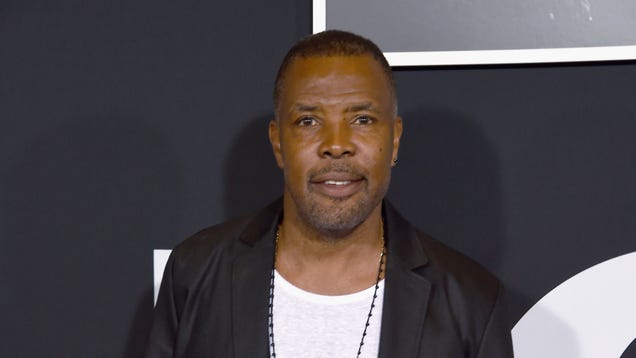
There is a long and black ass line of cast members waiting to enter Club Zamunda, but it looks like Eriq La Salle has decided to not do hoodrat things with his friends.
Bryant Heyward has some semblance of justice after settling a lawsuit against the Charleston County Sheriff’s Office as a result of getting shot in his home by a cop who confused him for a robber.
READ MORE: Cop that killed Atatiana Jefferson responded as if there was a burglary
In 2015, Heyward called the police after armed burglars broke into his home. But in the mix-up, Heyward was shot by a cop and ended up paralyzed from the neck down. He initially filed a $25 million lawsuit but settled for $750,000, his attorney told ABC News on Sunday.
“This case was very complicated. Bryant was a completely innocent guy and everything that could have went wrong did go wrong,” his attorney, Justin Bamberg, said.
“With no footage of the shooting, certain factual disputes created a proverbial he-said, he-said situation. However, nothing changes the fact that Bryant was an innocent homeowner shot in a tragic turn of events.”
“His life changed forever, but he’s one of the fortunate ones who survived one of these bad encounters with law enforcement,” he added.
Heyward who lives in Hollywood, South Carolina, reportedly was holding a gun when Charleston County Sheriff’s saw him, which was the catalyst that caused confusion. Heyward reported to 911 dispatchers that two robbers had guns and were “banging at the window” trying to break in.
But by the time the Sheriff’s deputies arrived, the burglars were long gone, and Heyward was the one reportedly holding a weapon.
Heyward was shot and his injuries not only left him paralyzed but in need of medical care for life. His attorney explained that his client is unable to wash his own body or feed himself without assistance. He is also emotionally spent, his attorney said.
READ MORE: 5 things to know about police shooting victim Atatiana Jefferson
“I’ve had a few cases in my career that emotionally put me through the wringer and this is one of them,” Bamberg said. “It hurts to have a young man who is in his late 20s tell you they would rather be dead because he can’t move anything below his neck.”
“Over time, his spirit revitalized and his spirit was rebuilt. Now he says, ‘I’m a survivor, I can beat this.’ He learned how to use this chair and he realized that he’s blessed because he still gets to talk to his loved ones and visit his friends,” he said.
The settlement agreement reportedly happened back in May but Heyward told his attorney to keep details private to protect his him. He wants his story now to encourage others.
“We didn’t say anything; we were mindful that what kick-started this whole thing was foolish people trying to break in to steal from him,” Bamberg said. “We didn’t want to put out how much money he got just in case someone tried to target his house again.”
The post Man mistaken as a burglar and shot by police settles case for $750K appeared first on theGrio.


